
We found love in a hopeless place
No, I am not writing the lyrics to Rihanna’s song. We actually found love in a place we never thought we would.
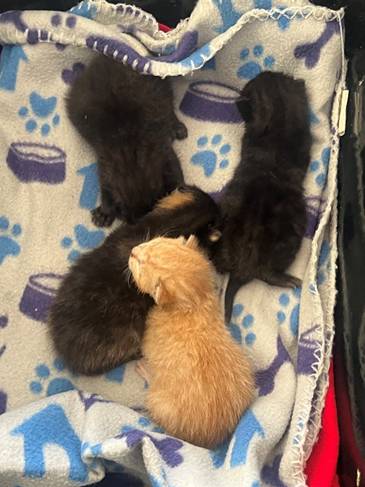
Last month my husband rang me coming home from work as he always does and said that he was going to be a bit late. Thinking that it may be another “fault” he has to go fix, I asked him where he was going. To my surprise, he said that he was going to the vet as he found “kitchen”. Kitchen? What kitchen? And why are you going to the vet if you found a kitchen and where? Turns out he found 4 neonatal kittens in one of the railway yards so had to rescue them. He was going to take them to the vet in Christchurch but I insisted that he brings them to the one closer to home so our son and I could see them and potentially bring one home.
We get to the vet extremely excited and wait for him to arrive. He finally gets there with a tiny carton box with the babies in them. The first thing I say is “How are 4 kittens in that tiny box?” Then we look at the babies and they are tiny, no bigger that the mouse I found at home that morning. We take then to the nurse too nervous to even cuddle them, I was too scared that I would hurt them. We start filling up the submission form while talking to the nurse about the process that the kittens will go through. They were being examined by the vet at this point, and I really want to take one home. The nurse tells us that one kitten will not survive without the litter if separated this early in life and that they will be contacting SPCA in the morning to hand them over. The practice already had 3 kittens that they were fostering and were too overwhelmed to take 4 more.
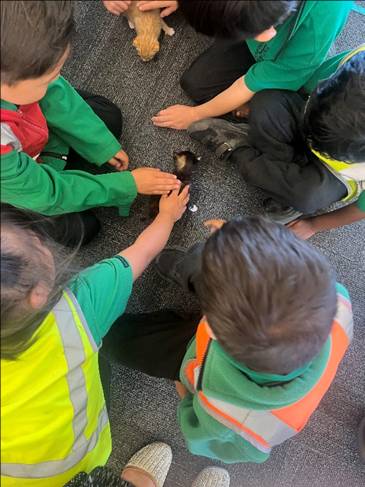
The nurse returns with the kittens saying that they look healthy and the mum must have been around as they look good for kittens that are about a week old. My heart goes out to the kittens and with some formula in hand and no idea whatsoever about taking care of them. The only knowledge I have at this point is that they need 2 hourly feeding and need stimulation to be toileted as they can’t do it on their own at this age. I do it overnight and feeling like a mum to a newborn again head to another vet with my attempt to see if they can foster them. I get the same reply that they can’t foster them but happy to take them to send to SPCA and that I can’t keep just one. Learning a few more things about taking care of them, I head home again, this time with some syringes as the kittens are not taking to the bottle and I am afraid that they are starving. And the saga continues of two hourly feeding and toileting. Now the vet had warned me that they may get constipated as formula feeding can do that. Great, now I must worry about just not the human children’s poo but the kittens as well. Next day rolls and they have not done a single poo. Back to the vet again where they get admitted for the day. I am so thankful to the kind nurses and doctor who took care of them free of change on that day and even sent me home with a box of formula for them. By day 4, I have mastered the routine but also am exhausted. Feels like I have quadruplets while working fulltime, “I need maternity leave for this” I think to myself but unfortunately that’s not how it works. Mind you, my husband is away in Wellington for the long weekend to help with the project there. Come Saturday, I am exhausted and ready to hand 2 kittens over to SPCA, I make and appointment and take them there. With a heavy heart, I drop 2 of the kittens off to the lovely staff there who were very helpful through the process.
This experience has made me appreciate all the hard work that the organisations like SPCA, Cat Protection League and Cat rescue do for so many rescue kittens every year. True appreciation to the volunteers that foster the kittens till they are old enough for adoption.
Why is it important to support these organisations?
As per Department of Conservation, feral cats are biggest threat to our native birds and insect population. According to Cat Rescue a female cat can start giving birth as young as 4-5 months and can have up to 3 litters a year, each litter comprising average of 5 kittens. If they are not captured and desexed, the population gets out of control, and it affects the population of other native birds and insects.
How can we help?
Volunteer- There are various ways of volunteering.
- If you find stray/abandoned kittens, take them to the nearest vet who can examine the kittens and send them to various organisations to be fostered. Do not approach if mum is around as she can get protective and attack, contact the organisation and give the location so they can be captured safely. Kittens after the age of 8 weeks can be difficult to socialised and rehomed so it is important that they get this opportunity before they reach that age.
- The organisations rely on volunteers to foster the kittens till they are ready to be adopted. Most of the organisations do not have enough space in the shelters to accommodate for the kittens and rely on the volunteers taking them home to socialise and look after.
- Adoption- if you are looking at adopting a kitten, make rescue kittens your priority. While there may be questions about breed and temperament while getting a rescue kitten, all cats need a loving home, and temperament depends a lot on individual cat and environment rather than the breed. It is cheaper and more ethical to get a rescue cat as this gives them a second chance in life and saves them from getting euthanized.
- Donation- The cost of taking a neonatal kitten is huge. Includes the cost of vet bill and medication which some kittens may need, formula that they need till they are 8 weeks old (double the cost of human baby formula) and then the ongoing cost of food as they transition into solids. All this cost, along with bedding, shelter, vaccination and desexing is managed by the organisations.